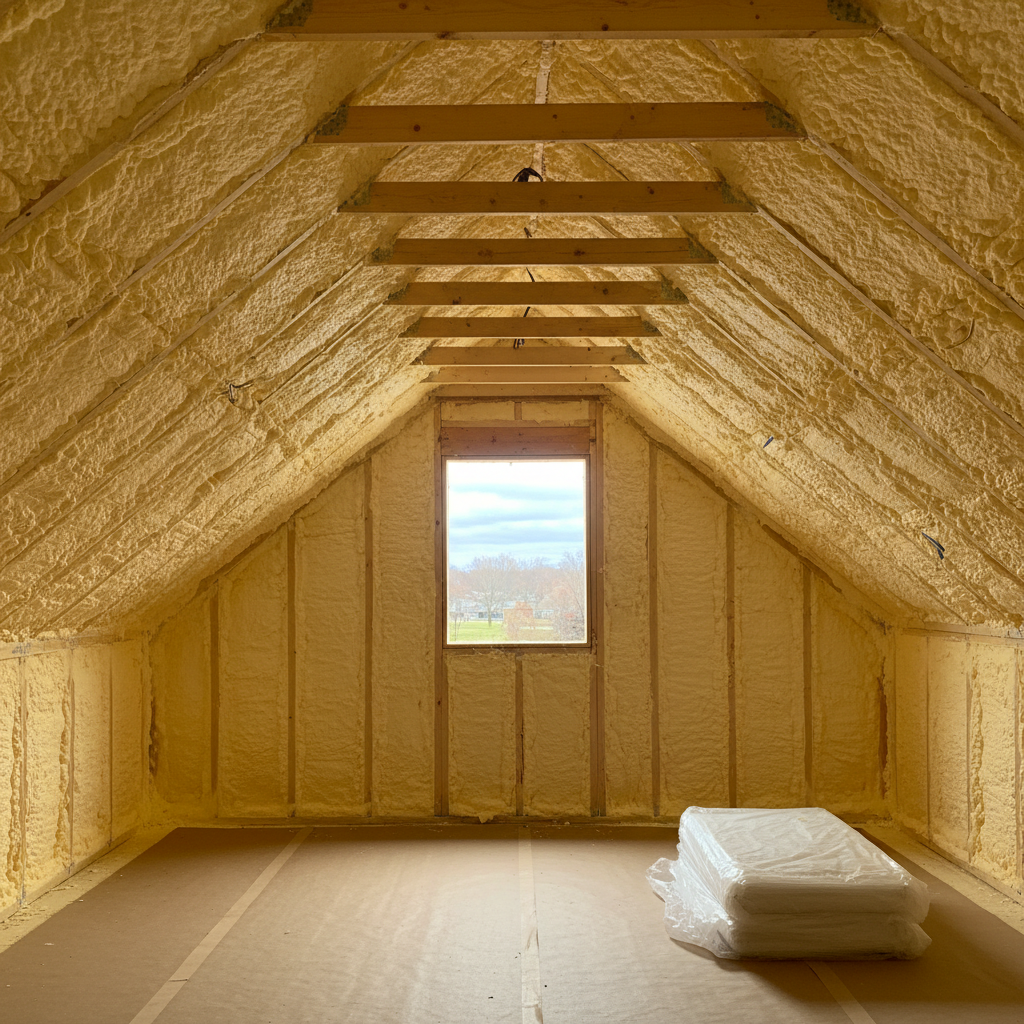
So, you're thinking about closed-cell spray foam? Smart move. It's a fantastic product when everything's done right, offering amazing insulation and really sealing up your home. But, believe me, I've seen plenty of homeowners right here in Arlington Heights get burned because they just didn't know what to watch out for. Let's dig into the biggest mistakes I see people make when they're planning a spray foam job or trying to hire someone for it.
Mistake #1: Not Really Checking Out Your Contractor
This one's probably the biggest. Look, everyone wants a good deal, I get that. But spray foam isn't like painting a wall; it's a chemical process, and it demands precision and real expertise. I've watched folks hire the cheapest guy with a truck, only to end up with a total mess. You've got to ask questions. Lots of them.
- Are they certified? Spray foam manufacturers actually offer training and certifications. If a contractor can't show you proof, that's a huge red flag, isn't it? It usually means they might not know the right mixing ratios, how to apply it properly, or even the necessary safety steps.
- Do they have the right insurance? We're not just talking about general liability here. Spray foam involves special equipment and chemicals. Make sure their coverage specifically includes that kind of work.
- Can they give you references? And I don't mean their buddy. Ask for recent customers you can actually call. When you talk to them, ask about the crew's professionalism, how clean they kept things, and if the job met what they expected.
- How long have they been doing spray foam specifically? Someone might have been in construction for two decades, but only spraying foam for six months. That's a pretty big difference.
Don't just take their word for it, either. A good, reputable company, like Allied Insulation, will be happy to give you all this information.
Mistake #2: Forgetting About Ventilation and Air Quality
Closed-cell spray foam creates this super-tight building envelope. That's its superpower! But it also means your house won't "breathe" the way it used to. If you don't deal with ventilation, you could end up with indoor air quality problems. I've seen homes in older Arlington Heights neighborhoods, especially those with original plaster walls, sealed up tight without anyone thinking about how that affects moisture and fresh air. You might need to consider mechanical ventilation, like an ERV (Energy Recovery Ventilator) or HRV (Heat Recovery Ventilator), especially in damp spots like basements or attics.
A good spray foam contractor isn't just someone who sprays foam; they should understand building science and talk to you about ventilation strategies. If they don't bring it up, well, you definitely should.
Mistake #3: Not Grasping All the Prep Work Involved
Spray foam isn't some magic bullet you just spray over anything. The area needs to be clean, dry, and free of debris. Any electrical boxes, plumbing, or wiring that you'll need to get to later should be protected or marked. I've seen homeowners totally surprised by how much masking is needed to keep overspray off surfaces. You really don't want foam on your brand-new windows or hardwood floors.
Also, temperature matters. Both the surface and the air temperature need to be within the manufacturer's specific range for the foam to cure correctly. Trying to spray when it's too cold or too hot can lead to bad adhesion, off-gassing, or a product that just doesn't work as well. This is super critical, especially with our crazy weather swings here in Illinois.
Mistake #4: Only Thinking About R-Value
Sure, R-value is important, but it's not the whole story when it comes to spray foam. Closed-cell spray foam does more than just resist heat transfer; it's also an amazing air barrier and vapor barrier. This air sealing quality often has a bigger impact than just the R-value alone, especially for how comfortable your home feels and how much energy you save. Many traditional insulation types have a decent R-value but don't stop air movement, and that's where a lot of your heat or AC just escapes.
When you're comparing bids, don't just look at the R-value per inch. Ask about the air sealing properties and how the foam will create a continuous thermal and air barrier. A contractor who only talks R-value might be missing the bigger picture of what spray foam actually does for your home.
Mistake #5: Not Getting a Detailed Scope of Work
A simple quote with just a price? That's not enough. You need a detailed breakdown of everything that's included. Which areas will they spray? What thickness will they apply? What kind of foam (open-cell or closed-cell, though we're focusing on closed-cell here)? What's their cleanup process? What about the warranty?
If the quote is vague, it leaves way too much room for interpretation and potential arguments later. You want to know exactly what you're paying for and what you should expect from the finished product. A good contractor will give you a clear, written proposal that covers all these points, so there are no surprises.
Doing your homework upfront can save you a ton of headaches and money down the road. Closed-cell spray foam is an investment, and like any big investment in your home, it really pays to get it right the first time.