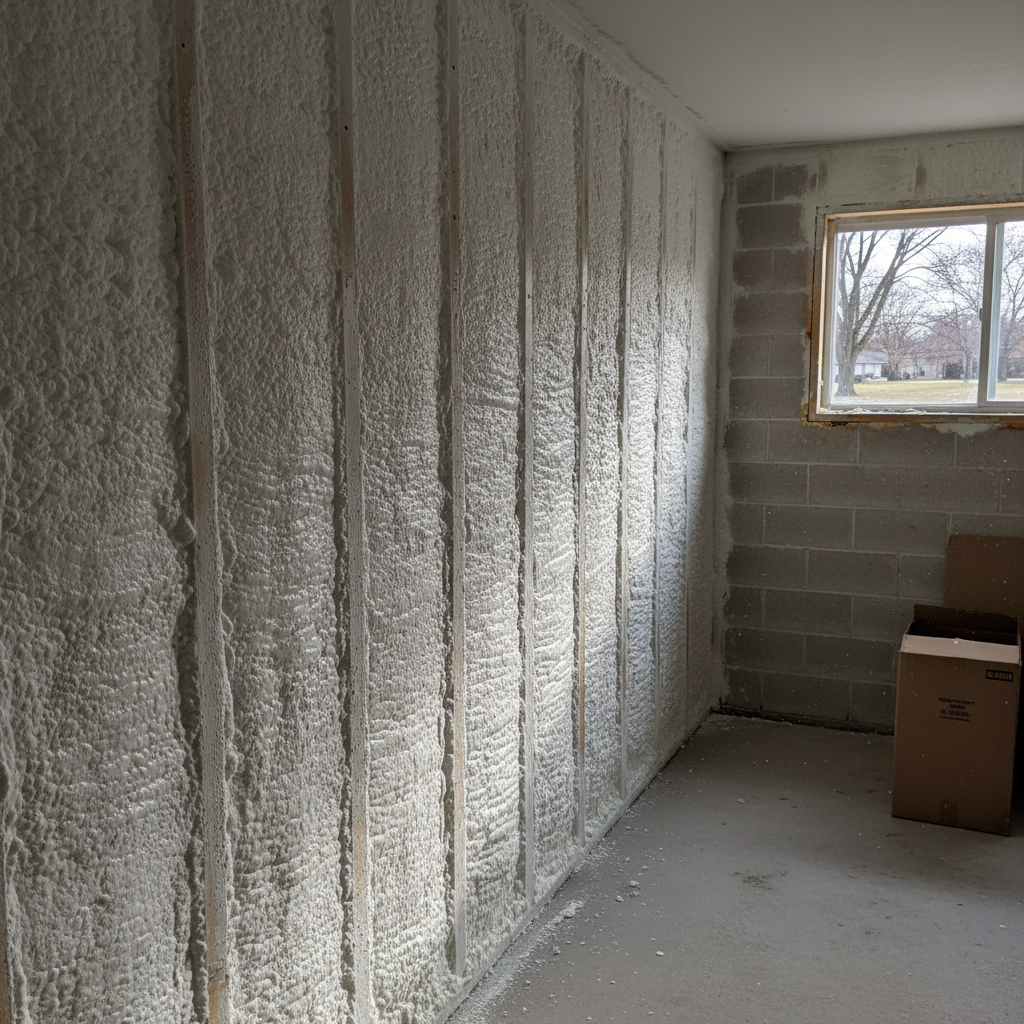
Keeping a garage comfortable through a Northwest Chicagoland winter without spending too much money is a common goal for homeowners. People ask Allied Insulation this question all the time down here in Arlington Heights, IL. Between the freezing wind whipping off the plains and those humid July afternoons, your garage takes a real beating. Allied Insulation receives a ton of questions about how to handle these spaces, so let us break down the most common things homeowners want to know about Garage Insulation in Arlington Heights.
Should I insulate my garage if it is not heated?
Yes, especially if the garage is attached to your house. An uninsulated garage acts like a giant thermal sink right next to your living space. During January deep freezes, that concrete slab and those uninsulated walls pull heat right out of the rooms adjacent to or above the garage. Even without a dedicated heater out there, adding Garage Insulation stabilizes the temperature. It keeps the space from bottoming out at zero degrees, protects your plumbing lines running through shared walls, and stops your furnace from running constantly.
What is the best material for garage walls and ceilings?
It depends on how you plan to use the space. If you just want to take the edge off the cold, standard fiberglass batts fit easily between standard wood studs. But if you want a tight thermal envelope that stops drafts dead in their tracks, closed-cell spray foam or rigid foam boards are very effective choices for Garage Insulation. Our local clay-heavy soil and fluctuating humidity mean moisture management matters too. Spray foam doubles as an air barrier, which prevents condensation issues that lead to mold down the road.
Do I need to insulate the garage door too?
That is usually where most of the heat escapes anyway. Putting insulation in the walls while leaving a thin, uninsulated metal garage door is like wearing a heavy winter coat with the front wide open. You can buy Garage Insulation kits for existing doors, or upgrade to a modern insulated sectional door. It makes a massive difference in how the entire garage feels.
Will insulating my garage lower my energy bills?
It certainly helps, particularly for the rooms sharing a wall or ceiling with the garage. Bonus rooms built over garages in many Arlington Heights split-levels are notorious for being freezing in the winter and roasting in the summer. Sealing and installing Garage Insulation fixes that drafty floor problem upstairs and lightens the load on your HVAC system.
How long does a typical garage insulation project take?
Most standard two-car garages can be wrapped up in a single day. If Allied Insulation is installing blown-in material or batts, the process goes very fast. Spray foam takes a bit of prep and curing time, but you are typically looking at a turnaround of one to two days or less before you can get back to using your space normally.