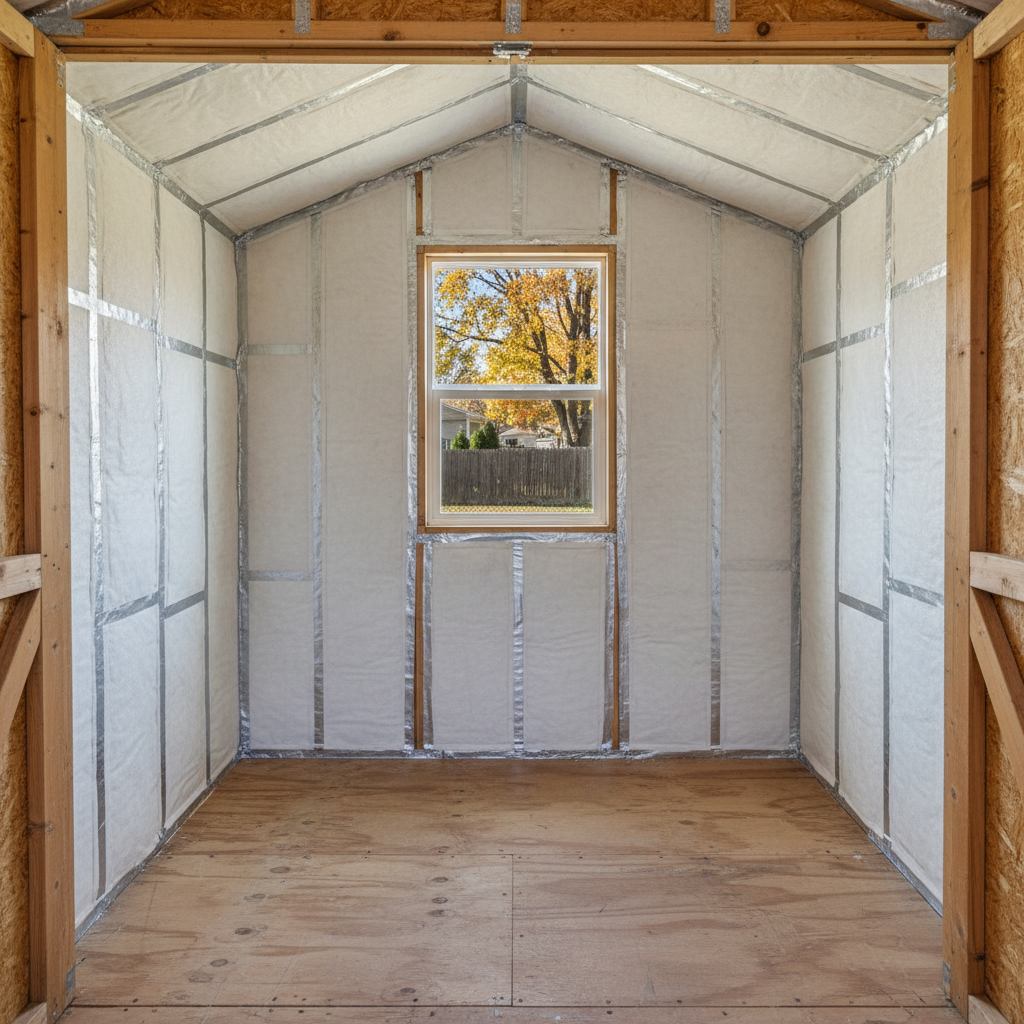
You've got a shed, right? Maybe it's for gardening tools, a workshop, or even just overflow storage. And if you're like a lot of folks around Arlington Heights, especially when winter hits or summer bakes, you start thinking, "Man, I should really insulate that thing." It's a great idea, but I've seen plenty of homeowners make some pretty common blunders that end up costing them more in the long run or just leaving them frustrated. Let's talk about what to watch out for.
Not Defining the Shed's Purpose First
This is probably the biggest one. Before you even think about insulation materials, ask yourself: What exactly is this shed going to be used for? Is it just to keep your lawnmower from freezing solid? Or are you planning on spending hours out there, maybe as a woodworking shop or a quiet office space? The answer changes everything.
- If it's just for basic storage, you might only need a vapor barrier and some basic R-value to prevent condensation and keep extreme temps from damaging sensitive items. You don't need to go all out with R-30 walls.
- If it's a workshop or a 'man cave,' you'll want proper wall, ceiling, and even floor insulation, plus maybe a small heating/cooling unit. You'll need higher R-values and a continuous thermal envelope.
Without a clear purpose, you're either overspending on insulation you don't need or underspending and ending up with a shed that's still uncomfortable and inefficient. I see this a lot in older neighborhoods where people convert an existing, uninsulated shed into a hobby space without thinking through the thermal requirements.
Ignoring Air Sealing (The Elephant in the Shed)
You can pack your shed walls with the best insulation money can buy, but if you haven't sealed up all the cracks and gaps, you're basically throwing money out the window. Air leaks are insulation killers. Think about it: cold air seeping in through gaps around the door, windows, or where the walls meet the floor or ceiling will negate a lot of your insulation's R-value.
Before any insulation goes in, you need to be meticulous with caulk, expanding foam, and weatherstripping. Check around window frames, door frames, electrical penetrations, and any seams. This is especially true for older sheds that might have shifted over time. Don't skip this step; it's just as important, if not more, than the insulation itself.
Choosing the Wrong Insulation Material
There are a bunch of insulation types out there, and they're not all created equal for every application. Here are a few common missteps:
- Using standard fiberglass batts without a vapor barrier: Fiberglass is fine, but sheds, especially those without a conditioned interior, are prone to moisture issues. If you don't have a proper vapor barrier (facing the warm-in-winter side), you're inviting condensation, mold, and reduced R-value.
- Forgetting about rigid foam for floors: Many sheds sit on concrete slabs or wooden skids directly on the ground. Insulating the floor is crucial, especially in our Arlington Heights winters. Rigid foam boards (like XPS or polyiso) under a subfloor or directly on a slab are excellent for this, offering high R-value and moisture resistance. People often insulate walls and ceilings but completely forget the cold coming up from below.
- Not considering spray foam: While it's a bigger investment, closed-cell spray foam is a fantastic option for sheds. It provides excellent R-value, acts as its own air and vapor barrier, and adds structural rigidity. For a workshop, it's often worth the cost because it creates such a tight, efficient envelope.
DIY Blunders and Skipping Professional Advice
Look, I'm all for DIY. But sometimes, you need to know when to call in the pros. I've seen homeowners try to tackle complex insulation jobs themselves, only to end up with gaps, improperly installed vapor barriers, or materials that aren't suited for the shed's environment. This often leads to needing to redo the job later, which means paying twice.
Even if you plan to do most of the work yourself, a quick consultation with an insulation expert can save you a ton of headaches. We can point out potential moisture issues, recommend the right materials for your specific shed and its intended use, and even show you proper installation techniques. It's like getting a roadmap before you start driving.
At Allied Insulation, we've helped plenty of folks in Arlington Heights get their sheds insulated right the first time. It's not just about keeping your stuff safe; it's about making that space truly usable and comfortable, whether you're working on a project or just grabbing a shovel. Don't make these common mistakes; plan smart, and you'll have a shed that serves you well for years to come.