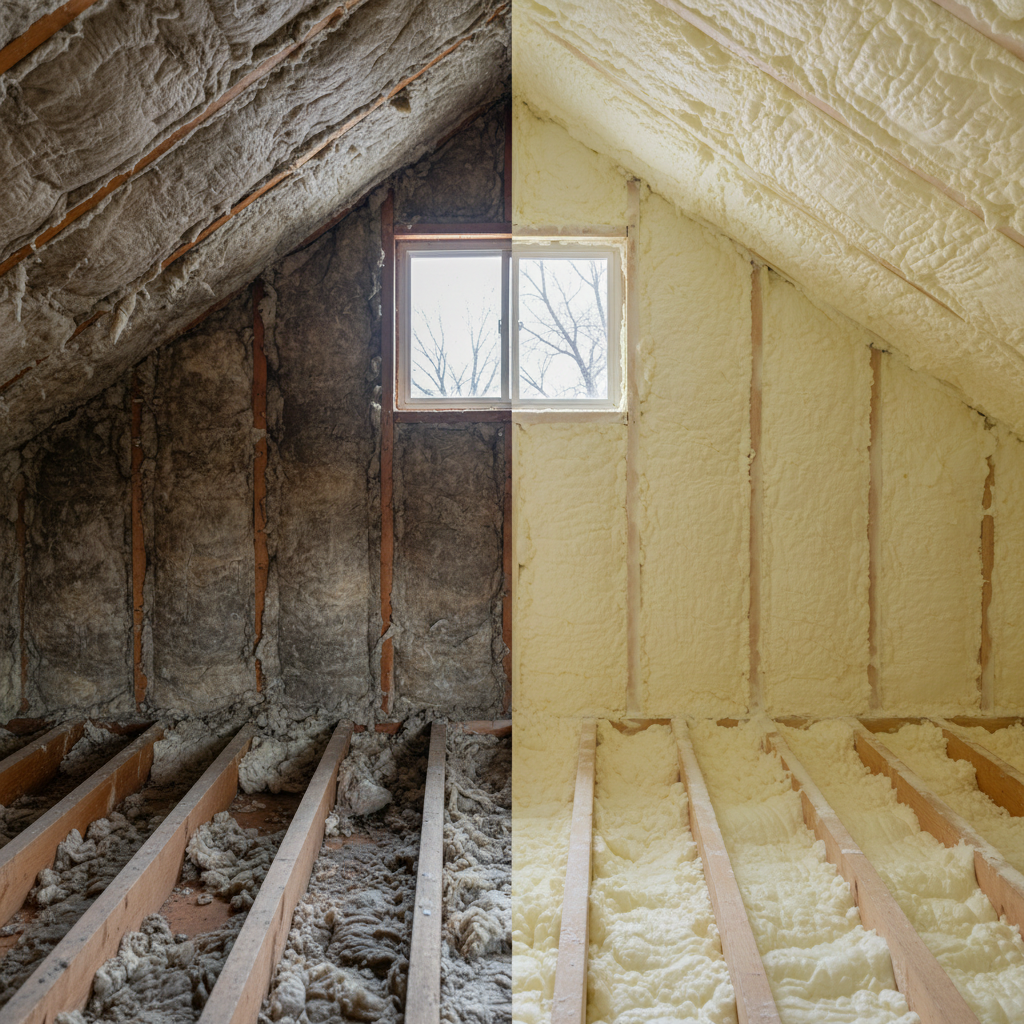
Alright, so you're thinking about open cell spray foam for your home here in Arlington Heights. Smart move. It's a fantastic insulator, really seals things up tight, and can make a huge difference in your energy bills and comfort. But once you decide on open cell, you've still got a couple of main ways to go about it: a full cavity fill or what we call a 'flash and batt' system. People often ask me, 'Which one's better, Mike?' And like most things in construction, the answer isn't always black and white, but I can tell you what I've seen work best around here.
Full Cavity Open Cell: The Whole Shebang
Let's start with full cavity open cell. This is exactly what it sounds like: we spray the open cell foam directly into the entire depth of your wall or ceiling cavity. So, if you've got a standard 2x4 wall, we're filling that 3.5-inch space completely with foam. If it's a 2x6, it's 5.5 inches. The idea here is maximum air sealing and maximum R-value for that given space. Open cell foam expands like crazy, filling every little nook and cranny, sealing off air leaks that traditional batt insulation just can't touch.
The big upside? Incredible performance. You get a continuous thermal barrier that's practically airtight. This means fewer drafts, more consistent indoor temperatures, and a quieter home because the foam also helps with sound dampening. In a place like Arlington Heights, where we get those brutal cold snaps in winter and sometimes sweltering, humid summers, that airtightness really changes the game. It truly reduces the load on your HVAC system, which translates to lower utility bills. Durability? Once it's in, it's not going anywhere. It won't settle or sag like some other insulations. Maintenance is basically zero.
The downside? Cost. Full cavity open cell is generally the more expensive option upfront. You're using a lot more material, and the application takes a bit more time and precision. Also, if you ever need to run new wiring or plumbing through that wall cavity down the line, it's a much bigger job to cut through and then patch the foam.
Flash and Batt: A Hybrid Approach
Now, let's talk about flash and batt. This method uses a thinner layer, or 'flash,' of open cell spray foam, usually about 1 to 2 inches thick, applied directly to the sheathing or the back of the drywall. After that thin layer cures, we then install traditional batt insulation – typically fiberglass or rock wool – over the top of it to fill the rest of the cavity. So, in a 2x4 wall, you might have 1 inch of open cell foam and then 2.5 inches of R-11 or R-13 batt insulation.
Why do people go this route? Primarily, it's a way to save money. You get some of the benefits of spray foam's air-sealing capabilities without the higher material cost of a full fill. The flash layer does a great job of stopping air movement and creating a thermal break, and then the batt insulation provides the bulk of the R-value. It's a good compromise for those looking to improve energy efficiency significantly without breaking the bank on a full spray foam job.
The performance is still very good, much better than batt insulation alone, because that flash layer is doing the heavy lifting of air sealing. It's also a bit easier for future renovations if you need to access the wall cavity, as you're only cutting through a thin layer of foam before you hit the batt. Appearance-wise, once the drywall is up, you won't see either, but during installation, the flash and batt looks a little less uniform than a full cavity fill.
My Recommendation for Arlington Heights Homes
For most homeowners in Arlington Heights, especially if you're building new or doing a major gut renovation, I'm going to lean towards a full cavity open cell fill. Here's why:
- Our Climate Demands It: Those extreme temperature swings we get, from sub-zero winters to hot, muggy summers, really highlight the benefits of superior air sealing. A full fill ensures maximum protection against air infiltration and exfiltration. You'll feel the difference immediately.
- Long-Term Savings: While the upfront cost is higher, the energy savings over the lifespan of your home often make up for it. Your HVAC system won't have to work as hard, extending its life and reducing maintenance.
- Moisture Control: With our humid summers and sometimes damp conditions, especially in older homes around say, the Scarsdale neighborhood where basements can be a concern, a full air seal helps manage moisture movement within the wall cavities, reducing the risk of condensation and mold issues.
- Comfort & Sound: The added density of a full fill provides better sound dampening, making your home quieter and more comfortable year-round.
Now, if budget is a really tight constraint, or you're doing a smaller renovation where a full tear-out isn't happening, flash and batt is still a solid upgrade over traditional batt insulation alone. It's a good way to get a significant performance boost without the full investment. You'll still get better air sealing than just batts, and that's always a win.
Ultimately, it comes down to your budget and your long-term goals for your home's energy performance. If you want the absolute best performance and comfort for your Arlington Heights home, and you're in it for the long haul, full cavity open cell is the way to go. If you're looking for a very good improvement at a slightly lower price point, flash and batt is a strong contender. Either way, you're making a smart choice to improve your home's efficiency. Give us a call at Allied Insulation if you want to talk specifics for your place.