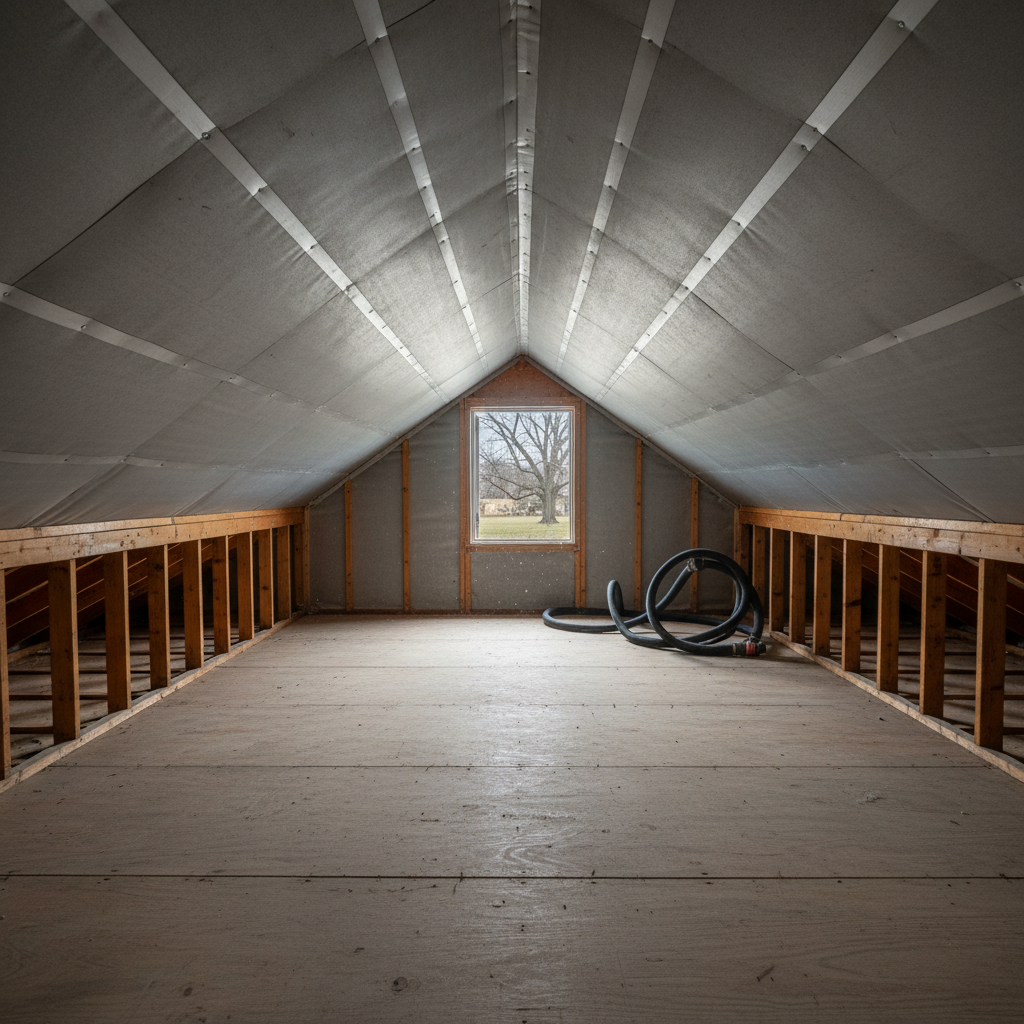
Alright, let's talk about getting rid of old insulation. It's not exactly the most exciting home improvement project, but sometimes, you just have to do it. Maybe your insulation's gotten moldy, or some critters have made a home in it, or you're simply upgrading to something better. Whatever the reason, you're probably wondering, "How much is this actually going to cost me?"
What Drives the Cost of Insulation Removal?
You might think it'd be pretty straightforward, right? Just pull the stuff out. But there's actually a lot more to it, and several things can really make the price jump up or down. I've seen all sorts of situations in homes around Arlington Heights, from those older ranches near Lake Arlington to the big two-stories in Scarsdale.
- The Type of Insulation: This is a huge factor. Got loose-fill fiberglass or cellulose? That's usually the easiest to vacuum right out with our big equipment. Batts are a bit more work; we have to pull those out by hand and bag them up. But spray foam? Oh boy, that's a whole different animal. It sticks to absolutely everything, so we often have to cut, scrape, and sometimes even chisel it off. That takes a lot more time and specialized tools, which, naturally, means more money.
- How Contaminated It Is: If your insulation is just old and dusty, that's one thing. But if it's packed with rodent droppings, urine, or mold, that's another story entirely. Contaminated material needs special handling. We're talking hazmat suits, respirators, and specific disposal rules. This drives up both labor costs and disposal fees. And frankly, we're talking about health risks here, so you really shouldn't cut corners on proper removal.
- How Easy It Is to Get To: Is your attic a big, open space with a wide access hatch? Fantastic, that helps keep costs down. Is it a tight, low-pitch attic with a tiny scuttle hole, or a cramped crawl space? That's going to add to the labor time and, yep, the overall cost. Sometimes we even have to remove attic flooring or cut new access points, which expands the project quite a bit.
- The Amount of Insulation: This one's pretty obvious. More insulation means more material to pull out, more bags to fill, and more trips to the dump. We usually figure this out by square footage and how deep the insulation is.
- Disposal Fees: Landfills charge us by weight or volume. And if the material is contaminated, it often comes with higher disposal fees. We can't negotiate these, so they just get passed right on to you.
- Where It Is in Your Home: Attics are common, of course, but sometimes we're removing insulation from walls, crawl spaces, or even rim joists. Each spot has its own set of challenges and affects how much labor is involved.
What You Can Expect to Pay (Roughly)
Look, I can't give you an exact number without actually seeing your place, but I can give you some realistic ballpark figures based on what we typically see around Arlington Heights. These are just general ranges, and they can definitely shift depending on all those factors I just mentioned.
- Loose-Fill (Fiberglass/Cellulose) Removal: For a typical attic, you're usually looking at somewhere between $1.00 to $2.50 per square foot. So, if your attic is 1,500 sq ft, that could be anywhere from $1,500 to $3,750. This usually covers vacuuming, bagging, and getting rid of it. If it's really dirty, expect to pay on the higher end, maybe even a little more.
- Batt Insulation Removal: This tends to be a bit more labor-intensive than loose-fill. You might see prices from $1.50 to $3.00 per square foot. For that same 1,500 sq ft attic, that's $2,250 to $4,500. Again, contamination will push this price up.
- Spray Foam Removal: This is the big one. Because it's so tough to remove, prices can jump from $4.00 to $8.00+ per square foot, and sometimes even higher for really difficult jobs or super thick applications. For a 1,500 sq ft area, you're easily looking at $6,000 to $12,000+. This is where you absolutely need a pro who knows their stuff to avoid damaging your home's structure.
Remember, these are just averages. A small, easy-to-access job might cost less, and a huge, difficult, contaminated one could be much more. We've certainly dealt with attics in older Arlington Heights homes where years of shifting soil and settling foundations have made access a real nightmare, and those jobs always take longer, you know?
What Should Your Quote Include?
When you get a quote from Allied Insulation or any other reputable contractor, make sure it clearly spells out what you're paying for. A good quote should break down:
- Labor Costs: This covers the crew's time on the job.
- Equipment Rental/Usage: Things like specialized vacuums and safety gear.
- Material Disposal Fees: The cost to legally and safely get rid of your old insulation.
- Site Protection: Laying down tarps, sealing off areas to keep dust and debris from spreading.
- Cleanup: Making sure the work area is tidy after everything's removed.
- Any Extra Services: Like minor repairs to access points or pest deterrents, if you've talked about them.
Don't just accept a single number. Ask for a detailed breakdown. If they can't give you one, that's a pretty big red flag.
How to Avoid Paying Too Much for Insulation Removal
Nobody wants to get ripped off, especially for something you won't even see once it's finished. Here's my advice:
- Get Multiple Quotes: This is Insulation 101, really. Get at least three detailed quotes. Don't just pick the cheapest one. Instead, compare what each quote actually includes.
- Ask for References: A good contractor will have plenty of happy customers. Give them a call.
- Check Licensing and Insurance: Make absolutely sure the company is licensed and insured. If someone gets hurt on your property and they're not insured, you could be held liable. This isn't negotiable.
- Understand the Scope: Make sure both you and the contractor are totally clear on what's being removed, from where, and to what extent. Ask about their plan for containing dust and debris.
- Don't Pay Upfront: A reputable company won't ask for full payment before they even start working. A reasonable deposit is fine, but the bulk of the payment should happen once you're satisfied with the work.
- Watch Out for High-Pressure Sales: If they're pushing you to sign today or offering some "limited-time discount" that feels too good to be true, it probably is.
Insulation removal is a dirty, tough job, but it's super important for a healthy, efficient home. Do your homework, ask the right questions, and you'll get a fair price for quality work. If you're in Arlington Heights and need a hand, just give us a call at Allied Insulation. We're happy to walk you through the whole process.