Do I really need to insulate my garage in Arlington Heights?
I understand. You might think a garage is just for parking your car and storing things. But here in Arlington Heights, with our big temperature changes — I am talking about humid summer highs that can reach 90°F and cold winter lows that go well below 0°F — an uninsulated garage is a problem. It acts like a big thermal hole. This lets all that extreme weather affect any living spaces connected to the garage. Your furnace and your AC unit will end up working harder. Your energy bills will also go up with the temperatures. In addition, these extreme temperatures can damage anything you have stored in the garage, including paint, electronics, and even your car. So, yes, you probably need garage insulation in Arlington Heights.
What is the deal with insulating an unheated garage? Is it even worth it?
Yes, it is worth it, even if you do not plan on heating or cooling the garage space. Insulation helps keep the temperature inside the garage more stable. I have seen detached garages in Arlington Heights, even without heat, stay 15 to 20 degrees warmer than outside in the winter. These garages also stay much cooler in the summer, just because they are insulated. This insulation protects your stored items from those big temperature changes. This means your tools will not rust as fast, and your holiday decorations will not melt in July. Garage insulation also reduces moisture buildup. This can prevent mold and mildew from growing. So, even if the garage is just for storage, insulating it makes a big difference for Arlington Heights homeowners.
What parts of my garage should I insulate?
You want to create a full thermal envelope for the garage, just like your house has. This means insulating the garage walls, the garage ceiling, and the garage door. If you have an attached garage, the walls shared with your house are probably already insulated. However, you need to make sure the exterior garage walls get the same insulation treatment. The garage ceiling is very important, especially if you have a room above the garage. Insulating that garage ceiling can make a big difference in comfort for that upstairs room. And do not forget the garage door itself. Many homeowners overlook the garage door, but traditional garage doors offer very little insulation. This lets a lot of cold air or hot air right into the garage. Insulating the garage door can significantly reduce heat loss.
What kind of insulation is best for a garage in Arlington Heights?
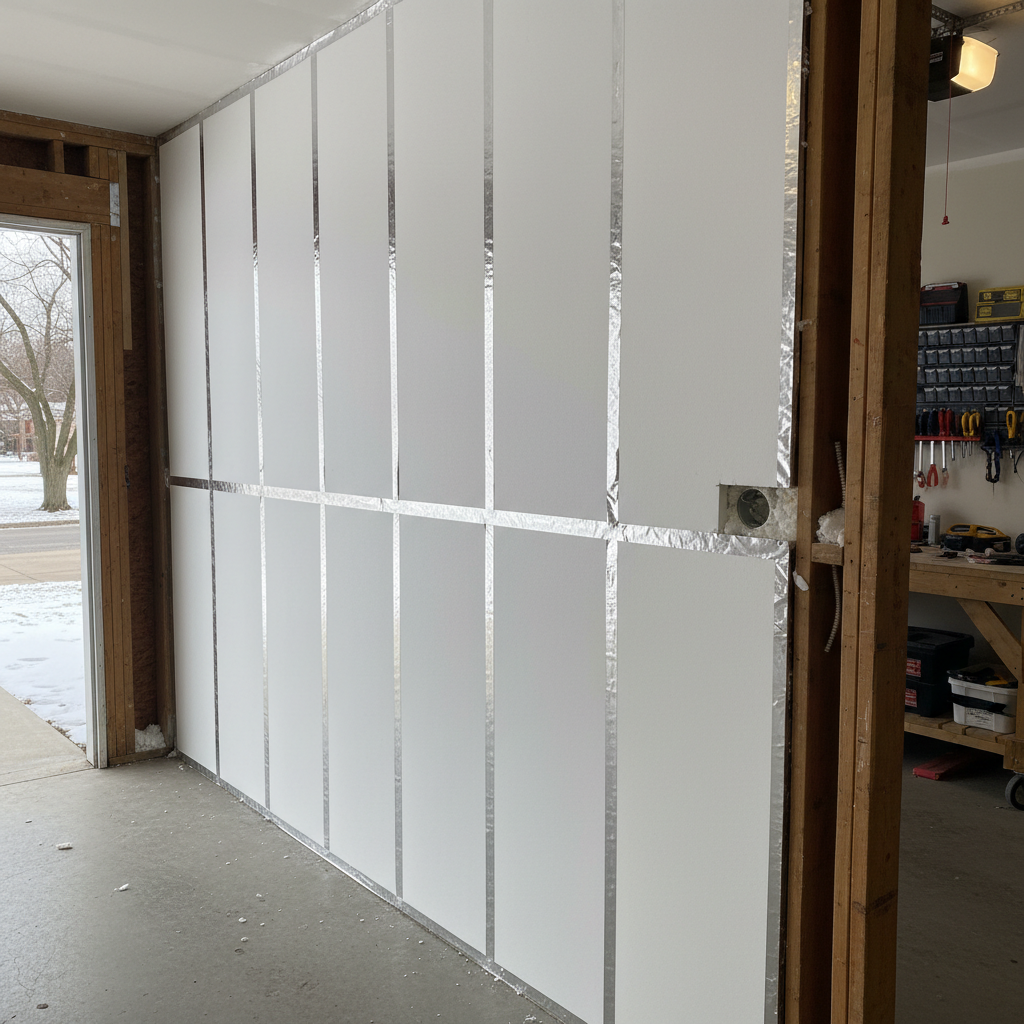
There is no one answer that fits every situation, but here is what we use. Allied Insulation mostly uses high-performance fiberglass batts, rigid foam panels, and closed-cell spray foam. Each type of insulation has its benefits. Fiberglass batts are usually affordable. They work well for garage walls and garage ceilings where you have open stud bays. Rigid foam board is good for concrete walls or if you need to add insulation to an existing wall. Closed-cell spray foam is the top choice for the best comfort and efficiency. It gives you excellent R-value, good air sealing, and moisture resistance, but it is a bigger investment. The best insulation choice really depends on your garage's structure, your budget, and what you are trying to do with the garage space. We will go over these insulation options together to find the right fit for your Arlington Heights property.
What R-value should I aim for in my garage?
R-value measures how well insulation resists heat flow. Higher numbers mean better insulation performance. For garage walls, you are usually looking for R-13 to R-19, especially if you have standard 2x4 framing. If you have 2x6 walls, you can go higher, like R-19. For garage ceilings, especially if there is a room above, you want to aim for R-30 to R-49. The Village of Arlington Heights follows the 2021 Illinois Energy Conservation Code. This code sets minimum insulation requirements. When a garage is conditioned, meaning it is heated or cooled, the garage walls and garage ceilings must meet the insulation requirements for our climate zone. Even for unconditioned garages, if they share walls or ceilings with conditioned living space, that shared boundary needs to be insulated. Allied Insulation always makes sure whatever we install meets or exceeds those local codes in Arlington Heights.
Will insulating my garage help with noise?
Yes, garage insulation will help with noise. Insulation acts as a good sound dampener. If you have a workshop in your garage, the insulation will help keep the noise from bothering the rest of the house or your neighbors. And if your garage is attached to your home, insulation can significantly reduce the sound of cars starting, the garage door motor, or even street noise from entering your home. This is a good bonus, especially if you have a bedroom right above or next to the garage in your Arlington Heights home.
What about fire safety in an insulated garage?
This is a very important point, and it is not something to ignore. If your garage is attached to your house, the wall between them needs to be covered with at least 1/2-inch gypsum board, which is drywall, on the garage side. If there is a living space above the garage, the ceiling below that room needs 5/8-inch Type X gypsum board. Any insulation that is exposed, like fiberglass or rigid foam, has to be covered with a 15-minute thermal barrier. This is usually drywall. This is not just a suggestion; it is a fire safety requirement. Allied Insulation makes sure everything we do is up to code to keep your Arlington Heights home and family safe.