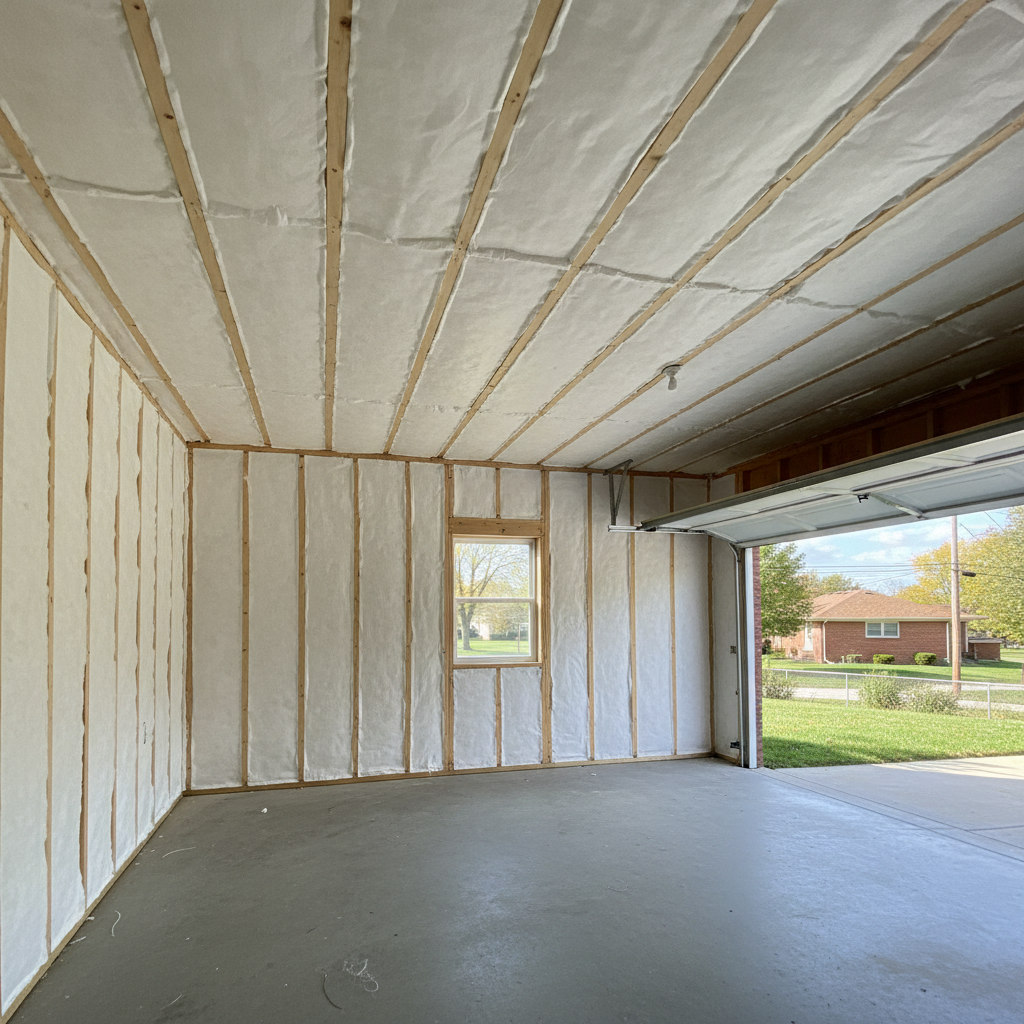
Thinking about insulating your garage? Smart move. Whether you're turning it into a workshop, a home gym, or just want to keep your car from freezing solid in January, it's an investment that really pays off in comfort and lower energy bills. But let's be honest, the first thing most people wonder is, "What's this actually going to cost me?"
I've been doing insulation work here in Arlington Heights for years. I've seen all kinds of garages, from those smaller single-car units in the older Scarsdale neighborhood to the sprawling three-car setups in newer developments. So, while there's no single price for everyone, I can definitely give you a solid idea of what to expect.
What Makes the Price Go Up (or Down)?
A few key things really push the price one way or the other. Understanding these will help you figure out where your project might land on the cost spectrum.
- Garage Size: This one's pretty obvious, right? A single-car garage (we're talking maybe 200-250 sq ft of wall space, plus the ceiling) will naturally cost less than a two-car (400-500 sq ft) or a three-car garage. More square footage means more material, and yep, more labor too.
- Insulation Type: This is a big deal.
- Fiberglass Batts: These are usually your cheapest option. They work well for walls and ceilings, and give you a decent R-value.
- Blown-in Cellulose or Fiberglass: We often use this for ceilings, especially if there's an attic space right above the garage. It can be a little pricier than batts, but it does a great job filling all the nooks and crannies.
- Rigid Foam Boards: These are excellent for walls, especially if you need a higher R-value but don't have a lot of space. They're definitely more expensive per square foot than batts, though.
- Spray Foam (Open-Cell or Closed-Cell): This is sort of the top-shelf choice for insulation. It seals everything up super tight, offers fantastic R-value, and acts as its own air barrier. It's also the most expensive option, but for a workshop or any space you're heating or cooling, it's often worth every penny.
- Which Areas Need Insulating? Are you just doing the walls? Or the walls and the ceiling? What about the garage door itself? Each additional area adds to the material and labor costs.
- Existing Conditions: If we have to pull out old, nasty insulation, or deal with mold, or even fix drywall before we insulate, that's going to add extra time and cost. If it's brand new construction or an empty garage, things usually go a lot smoother.
- Drywall & Finishing: Are you just insulating, or do you want us to put up new drywall and finish it? Most people want their garage walls covered after insulating, which, understandably, adds a good chunk to the total cost.
Typical Cost Ranges in Arlington Heights
Alright, let's get down to brass tacks. These are pretty rough estimates, based on what I've seen Allied Insulation and other good contractors charging around here. These prices generally cover labor and materials for the insulation itself, but usually NOT drywall unless you specifically ask for it.
- Single-Car Garage (Walls & Ceiling, Fiberglass Batts): You're probably looking at somewhere between $1,200 - $2,500. This is for basic R-13 to R-19 in the walls and R-30 in the ceiling.
- Two-Car Garage (Walls & Ceiling, Fiberglass Batts): Expect to pay $2,000 - $4,000. Again, this is for standard R-values.
- Three-Car Garage (Walls & Ceiling, Fiberglass Batts): This could easily run you anywhere from $3,000 - $6,000+.
- Upgrade to Spray Foam (Open-Cell, Walls & Ceiling): For a two-car garage, this could jump to $4,500 - $8,000+. Closed-cell costs even more. Spray foam is a premium product, and its price definitely shows it.
- Garage Door Insulation: If you're insulating the door itself, a DIY kit might be $100-$200. Having a pro install rigid foam panels can add $300 - $800 per door, depending on its size and type.
- Adding Drywall & Finishing: If you want the walls drywalled, taped, and mudded after insulation, you're usually adding another $3 - $6 per square foot of wall space. So, for a two-car garage, that's easily another $1,200 - $3,000 on top of the insulation work.
Just remember, these are ranges. Your specific situation might fall on the lower or higher end.
What Should a Quote Spell Out?
When you get a quote from Allied Insulation, or really anyone else, make sure it's super clear and detailed. It should specifically mention:
- Specific Insulation Type & R-Value: Are we talking R-13 batts? R-19? Open-cell spray foam at 3 inches thick?
- Areas to be Insulated: Walls, ceiling, garage door, rim joists, you name it.
- Total Square Footage: How much material are they estimating they'll need?
- Labor Costs: These should be clearly defined.
- Prep Work & Cleanup: Will they move your stuff? Will they clean up all the mess?
- Disposal Fees: If they're taking out old insulation.
- Warranty Information: For both the materials and the labor.
- Permits: For big insulation jobs, especially with spray foam, the Village of Arlington Heights might require a permit. Make sure your contractor is handling this.
How to Avoid Paying Too Much
Nobody wants to get ripped off, especially when you're trying to improve your home, right?
- Get Multiple Quotes: This is Insulation 101. Talk to at least three reputable contractors. Don't just pick the cheapest one; compare what's actually included in each bid.
- Ask for References: Any good contractor will be happy to give you some.
- Check Licenses & Insurance: Make sure they're properly licensed and insured to work in Illinois. You really don't want a problem on your property that isn't covered.
- Understand the R-Value: Don't just ask for "insulation." Ask for a specific R-value. For garages that aren't heated or cooled, R-13 or R-15 in walls is pretty standard. If you're heating or cooling it, you'll want R-19 or higher, and R-30 to R-49 in the ceiling.
- Be Wary of Lowballers: If one quote is way, way lower than all the others, there's usually a reason. They might be cutting corners on materials, skipping permits, or maybe they don't even carry proper insurance.
- Consider the Long-Term: Cheaper isn't always better, honestly. A slightly higher upfront cost for better insulation or a more thorough job can save you a lot more in energy bills and comfort down the line. Especially with our brutal Chicago winters and humid summers, good insulation really makes a difference.
Insulating your garage is a smart move. Do your homework, get clear quotes, and don't be afraid to ask questions. You'll end up with a comfortable, more energy-efficient space without completely draining your bank account.