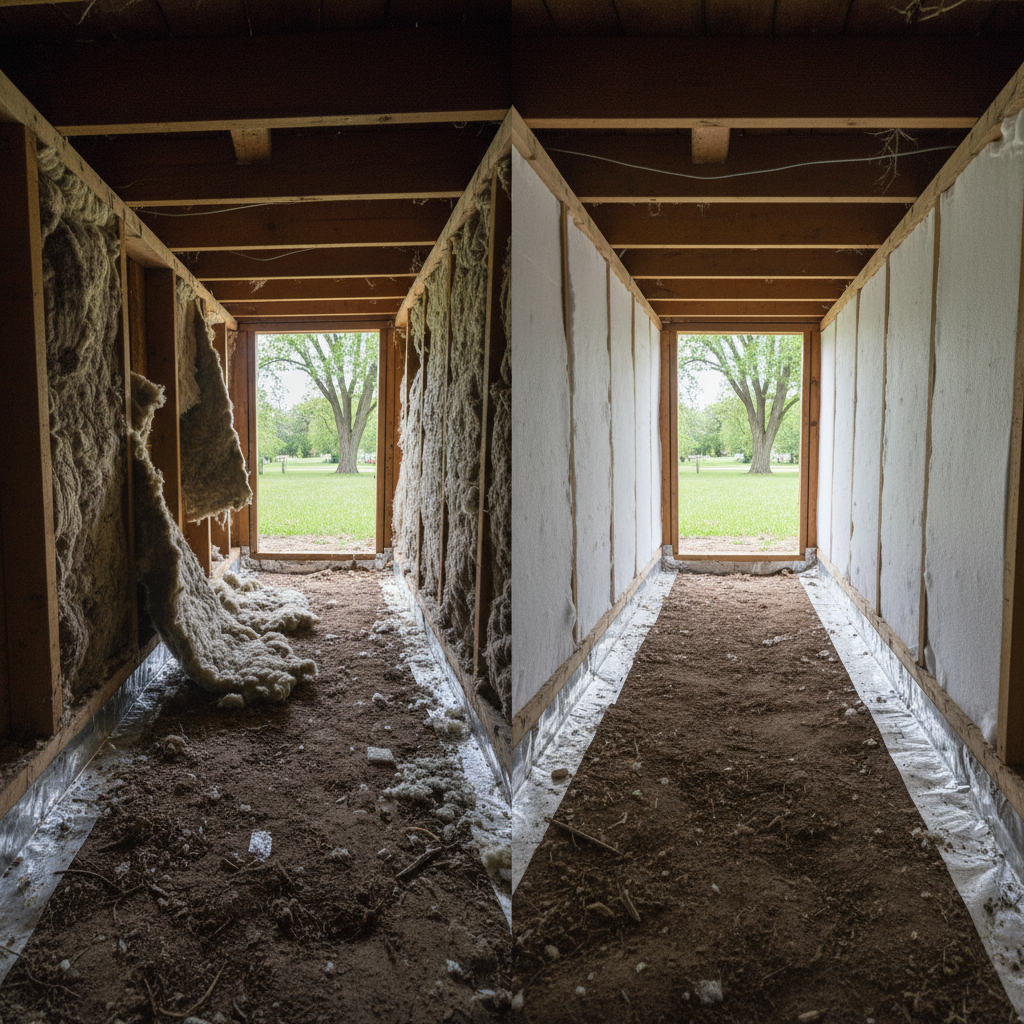
Alright, let's talk crawl spaces. If you've got one under your house here in Arlington Heights, you know it can be a real headache. Cold floors, high energy bills, maybe even some weird smells or critters. When it comes to fixing it, you've essentially got two main paths for insulation: the traditional approach or full encapsulation. I've seen both done countless times, and I'm here to tell you which one usually makes more sense, especially with our wild Illinois weather.
Traditional Crawl Space Insulation: The Old Way
So, what's traditional insulation look like? Typically, it means you're insulating the subfloor directly above the crawl space. We're talking about fiberglass batts, sometimes rock wool, tucked up between the floor joists. You might also see some insulation on the perimeter walls, but the main focus is often on that floor.
The Pros of Traditional
- Lower Upfront Cost: Generally, it's cheaper to install. Less material, less labor. If budget is your absolute top priority and you're not planning on staying in the house long-term, this might seem appealing.
- Familiarity: It's what people have done for decades. Most contractors know how to do it.
The Cons of Traditional
- Moisture Magnet: This is the big one, especially around here. Fiberglass insulation, when it gets damp, loses its R-value big time. And crawl spaces, even in well-drained areas like some of the older parts of Arlington Heights, are prone to humidity. That moisture can lead to mold, mildew, and wood rot. Once fiberglass sags and gets wet, it's pretty much useless.
- Energy Inefficiency: It doesn't seal the space. Air can still flow freely from the outside, bringing in cold air in winter and hot, humid air in summer. You're essentially trying to heat or cool the floor above, but not really controlling the environment below.
- Pest Haven: Open batts are an invitation for rodents, insects, and other critters looking for a warm, dark place to nest.
- Durability and Maintenance: You'll likely be replacing or re-tacking sagging insulation every few years, especially if moisture is an issue. It's not a set-it-and-forget-it solution.
Crawl Space Encapsulation: The Modern Solution
Encapsulation is a whole different ballgame. Instead of just insulating the floor, you're treating the crawl space as an extension of your home's conditioned space. This involves several key steps:
- Vapor Barrier: A heavy-duty, reinforced polyethylene liner (usually 10-20 mil thick) is laid across the entire crawl space floor, extending up the walls, and sealed at all seams and penetrations. This completely blocks ground moisture.
- Wall Insulation: Rigid foam board insulation is installed on the perimeter walls of the crawl space. This creates a thermal barrier.
- Sealing Vents and Openings: Any existing crawl space vents to the outside are sealed off. This stops outside air from getting in.
- Dehumidification (Optional but Recommended): Often, a dedicated crawl space dehumidifier is installed to maintain optimal humidity levels.
The Pros of Encapsulation
- Superior Moisture Control: This is where encapsulation shines. It completely isolates the crawl space from ground moisture and outside humidity. No more mold, mildew, or musty smells. This is HUGE for air quality in your home.
- Massive Energy Savings: By conditioning the crawl space, you're not losing heat or AC through the floor. Your HVAC system works less, and your energy bills go down. I've seen homeowners save significant money on their utility bills after encapsulation.
- Improved Indoor Air Quality: A dry, clean crawl space means the air circulating into your home is cleaner. Less allergens, less odors.
- Pest Deterrent: With a sealed, dry environment, pests are much less likely to set up shop.
- Enhanced Comfort: Your floors will be warmer in winter and cooler in summer. No more cold spots.
- Structural Protection: Keeping wood joists and beams dry protects them from rot and extends the life of your home's foundation.
- Durability and Low Maintenance: Once it's done right, it's built to last. You won't be crawling down there to re-tack insulation.
The Cons of Encapsulation
- Higher Upfront Cost: There's no getting around it; encapsulation is a bigger investment initially. More materials, more specialized labor.
- Requires Professional Installation: While some DIYers might try parts of it, getting a proper, sealed system really needs a pro. Allied Insulation has done hundreds of these, and there's a real art to getting those seams and penetrations airtight.
Which One Should You Choose for Your Arlington Heights Home?
Honestly, for most Arlington Heights homeowners, especially if you plan on staying in your house for more than a few years, encapsulation is the clear winner.
Yes, the upfront cost is higher. But think about it: we get brutal winters and incredibly humid summers here. Traditional insulation just can't stand up to that constant moisture challenge. It's a band-aid solution that often fails, leading to bigger problems down the line. You'll spend more in the long run on repairs, higher energy bills, and potential health issues from poor air quality.
Encapsulation solves the root problems. It creates a healthy, energy-efficient, and durable space under your home. It's an investment that pays for itself in energy savings, improved comfort, and protecting your home's structure. Plus, when it comes time to sell, a clean, dry, encapsulated crawl space is a huge selling point.
You wouldn't put a leaky roof on your house, right? Don't settle for a leaky, inefficient crawl space. Get it done right the first time, and you'll be thanking yourself for years to come.