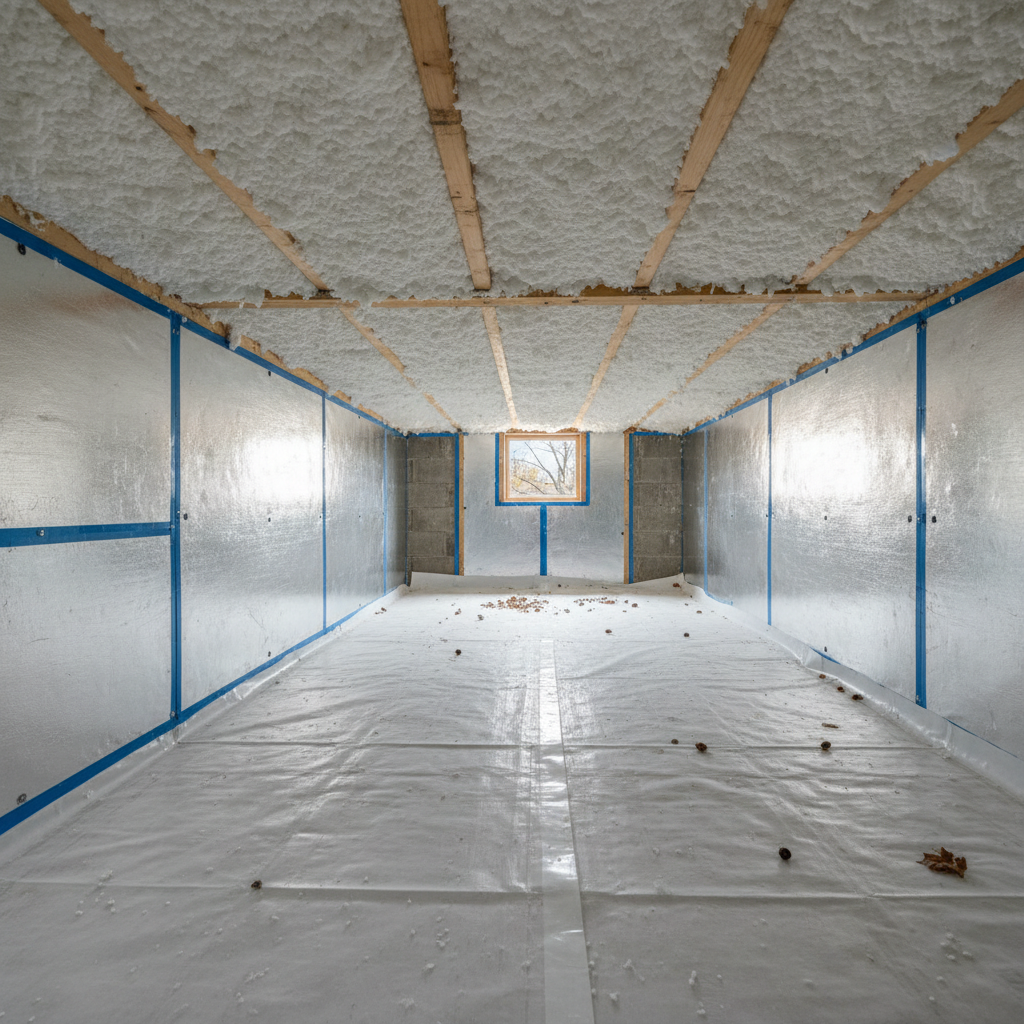
Your crawl space. It's probably not where you spend your Saturdays, but it plays a huge role in your home's comfort and energy bills, especially here in Arlington Heights. We get those brutal winters and humid summers, and an uninsulated or poorly insulated crawl space can make your floors cold, your AC work overtime, and even invite moisture issues.
Why Bother with Crawl Space Insulation?
Plain and simple, it saves you money and makes your home feel better. An uninsulated crawl space is like an open window to the outside, letting cold air in during winter and hot, humid air in during summer. That means your furnace and AC units are constantly fighting against the elements, driving up your utility bills. It also helps prevent pipes from freezing, which is a real concern when we get those deep freezes in January.
Beyond comfort and cost, proper insulation can help with moisture control. This is especially true for homes built on some of the older, clay-heavy soils we have around here, which can hold a lot of groundwater. Excess moisture in a crawl space can lead to mold, mildew, and even structural damage over time. Insulation, especially when combined with proper encapsulation, forms a barrier against that dampness.
Before You Start: Assessment and Prep
First things first, you need to know what you're dealing with. Grab a flashlight, put on some old clothes, and take a look. What kind of crawl space do you have? Is it vented or unvented? Is there a vapor barrier on the ground? Do you see any standing water, mold, or signs of pests? These are critical questions.
If you see standing water, significant mold, or pest infestations, stop right there. You need to address those issues first. Insulation won't fix a leaky foundation or a rodent problem; it'll just hide it and potentially make it worse. For significant moisture issues, you might need a drainage system or a full encapsulation, which is definitely a job for pros like us at Allied Insulation. We've seen too many DIY attempts at fixing major water problems end up costing more in the long run.
Assuming your crawl space is relatively dry and free of major issues, you'll want to clean it out. Remove any debris, old insulation that's fallen down, or anything that doesn't belong. Make sure it's as clean and dry as possible before you even think about installing new insulation.
DIY Insulation: What You Can Tackle
If your crawl space is dry, accessible, and you're just looking to add or replace basic insulation between the floor joists, this is where you might be able to do some work yourself. This usually involves installing fiberglass batts with a facing (like kraft paper) facing the conditioned space above. Here's what that typically looks like:
- Measure Carefully: You'll need to know the width between your floor joists and the depth. Standard batts come in common sizes, but older homes might have odd spacing.
- Safety First: Wear a good respirator, gloves, and long sleeves. Fiberglass isn't fun to get on your skin or in your lungs.
- Cut to Fit: You'll cut the batts slightly wider than the joist spacing so they fit snugly without gaps.
- Face the Warm Side: The paper or foil facing on the batt should always face the warm side of the structure, which is typically up towards your floor in a vented crawl space.
- Secure Them: Use insulation hangers (thin wire rods) to hold the batts in place between the joists. You don't want them falling down later.
This type of DIY project is best for vented crawl spaces where you're insulating the floor above. It's a good way to save some money if you're comfortable working in tight, dirty spaces.
When to Call the Pros (Seriously, Call Us)
There are several scenarios where trying to DIY crawl space insulation can lead to more problems than it solves, and it's just plain smarter to bring in a professional. We deal with these situations every day:
- Unvented Crawl Spaces (Encapsulation): If you have an unvented crawl space, or you're looking to convert a vented one to an unvented, you're talking about a full encapsulation. This involves sealing vents, installing a heavy-duty vapor barrier on the ground and up the walls, and insulating the perimeter walls with rigid foam board or spray foam. This is complex work that requires specific materials, tools, and expertise to do right. Improper encapsulation can trap moisture and create serious mold issues.
- Moisture Problems: As I mentioned earlier, if you've got standing water, dampness, or visible mold, you need professional help. We can identify the source of the moisture and recommend the right solutions, whether it's drainage, a dehumidifier, or a full encapsulation system.
- Pest Infestations: If critters are making a home in your crawl space, you need to get them out and seal up entry points before you insulate. Otherwise, you're just giving them a cozy new home.
- Limited Access or Hazardous Conditions: Some crawl spaces are just too tight or dangerous for a homeowner to navigate safely. If you're not comfortable, don't push it. We have the right gear and training for these situations.
- Spray Foam Insulation: This is a highly effective insulation method, but it's not a DIY product. It requires specialized equipment and training to apply correctly and safely. Improperly mixed or applied spray foam can be ineffective or even create health hazards.
After the Project: What to Expect and Monitor
Once the insulation is in, whether you did it yourself or hired a crew, you should notice a difference pretty quickly. Your floors will feel warmer in winter and cooler in summer. Your furnace and AC won't have to cycle as often, which means lower energy bills. You might even notice less dust or fewer pests making their way into your living space.
It's not a set-it-and-forget-it deal, though. You should still periodically check your crawl space, maybe once or twice a year. Look for any signs of new moisture, dislodged insulation, or pest activity. If you had an encapsulation done, make sure the vapor barrier is intact and the dehumidifier (if installed) is working properly. Catching small issues early can prevent them from becoming big, expensive problems.
Insulating your crawl space is a smart investment for any Arlington Heights homeowner. Doing it right means a more comfortable home and more money in your pocket. If you're unsure about any part of the process, or if your crawl space needs more than just basic batt insulation, don't hesitate to give us a call. We're here to help you figure out the best approach for your home.