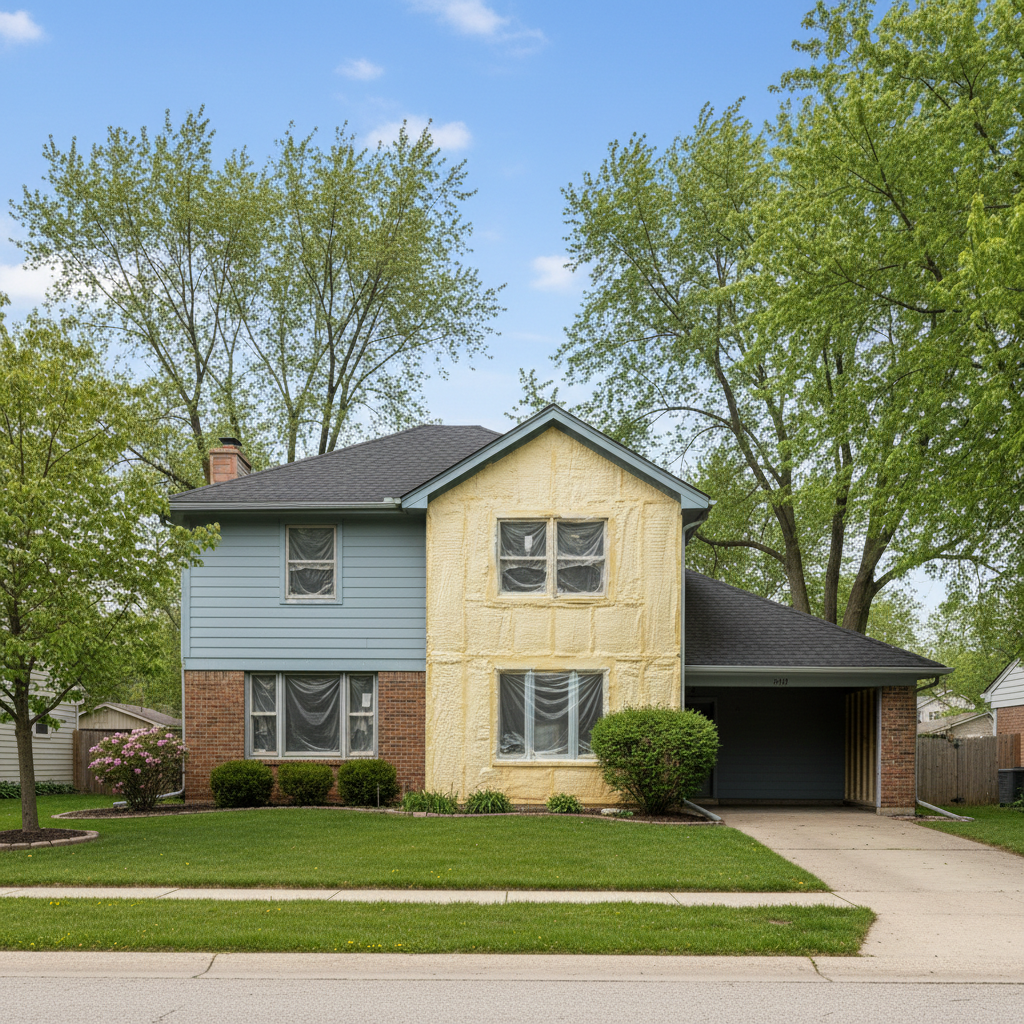
You ever wonder why some homes just feel more comfortable than others, even when they're the same age? A lot of times, it comes down to insulation. And when we're talking about serious performance, especially around here in Arlington Heights, closed-cell spray foam is often what I recommend. It's not just another insulation option; it's a whole different ballgame.
What Even Is Closed-Cell Spray Foam?
Alright, let's cut through the jargon. Imagine a super dense, rigid foam that expands and hardens right where we spray it. That's closed-cell spray foam. Unlike its cousin, open-cell foam, closed-cell has tiny, sealed pockets of gas inside. Think of it like millions of microscopic, sealed-off bubbles. This structure is what gives it some incredible properties that are perfect for our climate.
When it cures, it's really tough. You can actually walk on it in an attic or crawl space, something you definitely can't do with fiberglass or open-cell foam without crushing it. This density is key to its performance.
Why It's a Big Deal for Arlington Heights Homes
We see all kinds of homes here, from those charming, older Victorians in the Scarsdale neighborhood to the newer builds near Lake Arlington. And every single one of them battles the same thing: our crazy Midwest weather. We get brutal winters with those deep freezes that just suck the heat right out of your walls, and then humid, scorching summers that make your AC work overtime.
Here's why closed-cell foam is such a good fit:
- It's a serious air barrier. This is huge. Most heat loss and gain isn't just through conduction; it's through air leaks. Closed-cell foam expands and seals every tiny crack and crevice, stopping those drafts dead in their tracks. That means your furnace and AC aren't constantly fighting outside air.
- It's a vapor barrier. This is critical for preventing moisture issues. In our humid summers, or when warm, moist indoor air hits a cold surface in winter, you can get condensation. That's a recipe for mold and rot. Closed-cell foam won't let that moisture pass through, protecting your home's structure. This is especially important in places like rim joists or crawl spaces where moisture can be a real problem.
- It adds structural rigidity. Because it's so dense and rigid, it actually adds strength to the walls or roof deck where it's applied. It's like gluing your house together from the inside.
- High R-value in a small space. R-value is how well insulation resists heat flow. Closed-cell foam has one of the highest R-values per inch out there, often R-6 to R-7. That means we can get excellent insulation performance even in tight spaces, like older wall cavities that aren't very deep.
Where We Use It Most Around Here
I've put closed-cell spray foam in all sorts of places for folks in Arlington Heights. Some of the most common spots where it really shines include:
- Rim Joists: This is that band around the perimeter of your first floor, right above the foundation. It's notorious for air leaks and can be a huge source of drafts. Spraying closed-cell foam here seals it up tight.
- Crawl Spaces: If you've got a vented crawl space, you know how cold and damp it can get. Encapsulating it with closed-cell foam on the walls and rim joists transforms it into a conditioned space, making your floors warmer and improving indoor air quality.
- Basement Walls: Finishing a basement? Closed-cell foam on the foundation walls provides excellent insulation and a vapor barrier, keeping that space dry and comfortable.
- Garage Ceilings (especially under living space): If you've got a bedroom or living room above your garage, you know how cold it can get in winter. Closed-cell foam in the garage ceiling makes a huge difference.
- Attic Slopes/Cathedral Ceilings: For homes with vaulted ceilings, closed-cell foam sprayed directly to the underside of the roof deck creates an unvented attic assembly. This can make those rooms much more comfortable and prevent ice dams.
Why Local Expertise Matters for Spray Foam
This isn't a DIY job, and it's not something you want just any contractor doing. Spray foam, especially closed-cell, needs to be applied precisely. The mixing ratios, temperature, and application technique all have to be spot on. If it's not done right, you won't get the performance you're paying for, and you could even end up with problems.
As Allied Insulation, we've been working on homes right here in Arlington Heights for years. We understand the specific challenges our local homes face, from the age of the housing stock to the specific soil conditions that can affect foundation work. We know how to navigate the local building codes and what works best for our climate.
When you're investing in something like closed-cell spray foam, you want a team that knows what they're doing and stands behind their work. We're not just some out-of-town crew passing through; we're your neighbors, and we're committed to doing the job right for our community. Give us a call if you're thinking about upgrading your home's insulation. We're happy to talk through your options and see if closed-cell spray foam is the right fit for your situation.