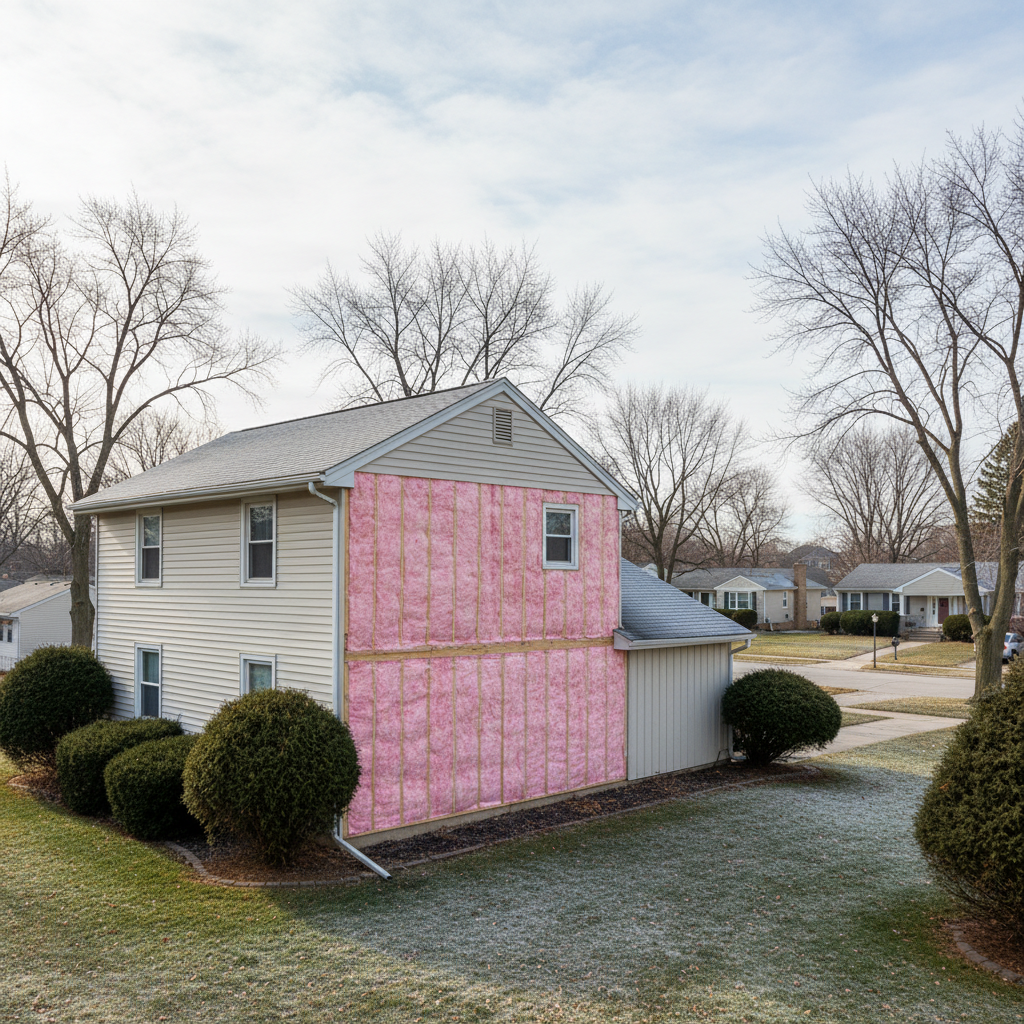
Is batt insulation still a good option for your home? Absolutely. I hear folks sometimes think it's old-fashioned, especially with all the buzz around spray foam. But for a lot of homes right here in Arlington Heights, a properly installed batt insulation job is really tough to beat for both performance and value.
What Even Is Batt Insulation, Anyway?
Let's get basic for a second. When I talk about batt insulation, I'm usually referring to those pre-cut rolls or sheets of fiberglass, rock wool, or sometimes even denim or cotton. They're made to fit snugly between studs, joists, and rafters. You'll see them with or without a paper or foil facing, which acts as a vapor barrier in certain situations.
It's a classic for a reason, you know? It traps air within its fibers, slowing down heat transfer. Simple science, really. But 'simple' doesn't mean 'easy to do right.'
Why Batt Insulation Still Shines in Arlington Heights
I've been working on homes around here for years, from the older, charming houses near downtown to the newer constructions out towards Buffalo Grove Road. And here's why batt insulation often makes so much sense:
Cost-Effective for Many Projects: If you're insulating an attic, a new wall, or even an existing wall cavity that's opened up for other renovations, batt insulation is usually more budget-friendly upfront than spray foam. That's a big deal for a lot of homeowners, isn't it?
Great for Standard Cavities: Most of our homes have pretty standard 16-inch or 24-inch on-center framing. Batt insulation is literally made for that. When it's cut and fitted perfectly, you get excellent coverage without a lot of waste.
Easy to Upgrade: Got an older attic with some sparse, blown-in cellulose or fiberglass? We can often lay new batts right over the top, or add them to fill out existing joist bays. This significantly boosts your R-value without needing a massive overhaul.
Common in New Builds and Additions: Even with all the advanced options out there, batt insulation is still a staple in new construction here. Builders use it because it's reliable, meets code, and is cost-effective for wall and ceiling cavities.
The 'Installation' Part is Key
This is where Allied Insulation comes in. I can't stress this enough: batt insulation is only as good as its installation. You could buy the best R-value batts on the market, but if they're squished, gapped, or cut poorly, you're just throwing money away.
I've seen it all: batts shoved in haphazardly, leaving gaps for air to sneak through. Electrical boxes and pipes left unsealed. Batts compressed behind wiring, which reduces their R-value — a real shame. In our climate, with those brutal Chicago winters and humid summers, every little gap is an invitation for drafts and energy loss.
Proper installation means:
Precise Cuts: Each piece needs to fit snugly, edge-to-edge, without being forced or leaving gaps.
Working Around Obstacles: Electrical boxes, plumbing, and wiring need careful cuts and sealing. You don't just push the batt behind them; you cut around them and use smaller pieces to fill any voids.
No Compression: Batts work by trapping air. If you compress them, you reduce that trapped air and lower the effective R-value.
Vapor Barrier Know-How: Knowing when and where to use a faced batt (with a vapor barrier) is critical, especially in our climate. Get this wrong, and you could be looking at moisture issues down the line.
Take the older homes in the Scarsdale neighborhood, for example. Many of those have plaster walls, and if you're doing a gut rehab or an addition, batt insulation is a natural fit for the new framing. But you've got to make sure it's installed perfectly to complement the existing structure and prevent those drafts that older homes are notorious for.
Why Local Expertise Matters
Anyone can buy batts from a big box store, but not everyone knows how to install them for our specific conditions. We understand the local building codes, the moisture challenges we face with our clay soils, and how our extreme temperature swings impact insulation performance.
When you hire a local pro like Allied Insulation, you're not just getting someone to stuff insulation in your walls. You're getting someone who understands how your home interacts with the Arlington Heights weather, and who knows how to make sure your insulation works as hard as it can for you.
Don't dismiss batt insulation. When done right, it's a powerful, cost-effective tool in your home's energy efficiency arsenal.